Ghost Someone Meaning in Dating: ghosting definition, ghosting in dating, and how to deal with being ghosted


You’re chatting like normal. A human reply fast, the jokes land, plans feel real, and for a moment it seems like this could turn into part of your life. Then one day: nothing. No “hey, I’m not feeling it,” no awkward goodbye, just silence. And you’re left wondering what happened, what you did, and how something that felt warm can vanish like it never existed.
Online communication makes meeting new people easy, especially through social networking. And if you want a safer way to talk with people worldwide, you can download Heymaty. On Heymaty, connections are often international, and that means new perspectives—but also different norms about replies, boundaries, and endings.
Ever had a chat that felt promising—only for the other person to disappear overnight? That experience is the heart of ghost someone meaning. In plain terms, the ghosting definition is: when a person suddenly stops communicating without an explanation, even though things was active or emotionally close before.
And ghosting isn’t limited to romance. Ghosting can happen in friendships, work chats, creative projects—pretty much all modern connections. They might still be online, posting stories, reacting to other people… but you get nothing. That is why knowing what is ghosting in relationships matters beyond dating.
In this article, we’ll unpack ghosting psychology, look at why do people ghost, outline the clearest signs of being ghosted, and share practical steps for how to deal with being ghosted. If you use Heymaty to meet people across borders, that context matters, because cultural habits can shape how someone communicates — or avoids it.
Content
What is Ghosting?
So, what does ghosting mean in dating? In ghosting in dating, someone ends contact by saying nothing at all. No closure text. No “I changed my mind.” No honest line about where things stand. One day they’re flirty, the next day they act like you don’t exist.
It also helps to separate ghosting from similar patterns. Breadcrumbing is when they give tiny bits of attention but never build anything real. Benching is when they keep you around as a backup. But classic ghosting behavior is a full stop—no explanation, no timeline, no ending.
This isn’t brand-new. What’s new is how easy it is now. With one tap, a person can mute, restrict, archive, or ignore. That convenience is a big reason ghosting has become so common in dating and even in professional spaces.
The Psychology Behind Ghosting
The simplest answer to why do people ghost: discomfort avoidance. For many people, silence feels easier than a hard conversation. They tell themselves that saying nothing is “kinder” than rejecting you. In practice, that often makes it worse.
Another driver in ghosting psychology is emotional avoidance. They may enjoy the fun stage—memes, flirting, easy attention — until expectations show up: consistency, clarity, plans. Then they pull away. Online dating can amplify that, because endless options can make commitment feel optional.
Sometimes ghosting behavior is tied to darker traits: low empathy, manipulation, or covert narcissism. Not everyone who disappears has a “big issue,” but when a person regularly leaves other people confused without a second thought, that pattern matters.
Stats vary by study, but many surveys suggest roughly 25–30% of adults have been ghosted at least once, with higher rates in app-based dating. So ghosting is common. But common doesn’t mean harmless.
Emotional Impact on the Victim
If you’re ghosted, the first feeling is often confusion, not anger. Your brain tries to fill the gap: what did I say, what did I miss, was I “too much”? Because there is no ending, you start writing one in your head — and that story usually blames you.
This is also why ghosting hurts: it creates an emotional cliffhanger. That uncertainty can fuel anxiety, damage self-esteem, and make future trust shaky. After being ghosted, many people notice they become hyper-aware of delays or tone changes, even when nothing is wrong.

Ghosting in the Digital Age: A Global Perspective
Technology didn’t invent rudeness, but it has made disappearing effortless. Read receipts, swipe culture, and endless chats can turn ghosting into a quick exit. In global social networking, people connect fast — yet emotional responsibility doesn’t always keep up.
Culture adds another layer. In some places, direct honesty is seen as respect. In other cultures, indirectness is used to avoid embarrassment. That can change how silence is interpreted. Still, when a connection felt real and then it’s gone, it stings, no matter where you’re from.
Ghosting in Professional and Creative Circles
Ghosting isn’t only romantic. It happens in business and creative spaces too: freelancers, editors, musicians, influencers, designers. A collab looks promising, the vibe is good, one call was great, and then they vanish. For Heymaty users who build international networks, that reality shows up often: different time zones, different habits, but the same quiet exit.
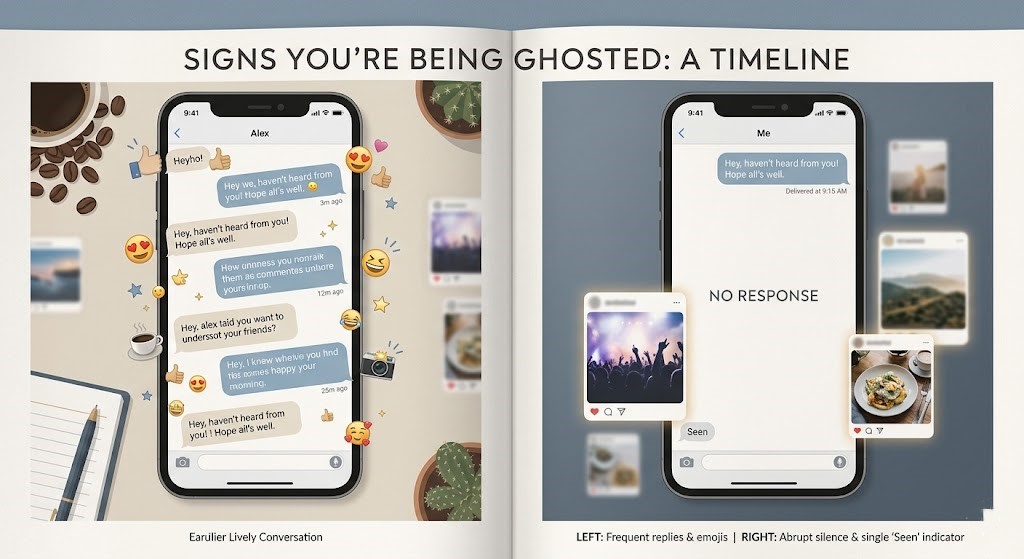
Recognizing the Signs of Being Ghosted Not every delay means ghosting. People get busy, travel, deal with family stuff. But signs of being ghosted look like a pattern, not a one-off late reply.
Here’s a quick checklist:
- Replies was steady, then they suddenly stop
- Messages have been seen, but no answer for days
- The person is active elsewhere, but not with you
- The usual jokes, reactions, and check-ins are gone
- You asked directly what’s going on, and still got silence
- Your anxiety grows, and you start blaming yourself
The clearest signal is silence when a brief explanation would obviously make sense. That is the core of signs of being ghosted.
Coping with and Overcoming Ghosting
If you’re looking for how to handle ghosting, start here: a disappearing person does not define your value. That choice reflects their communication skills (or lack of them), not your worth.
Try to stop re-reading the chat all day. Don’t refresh messengers every ten minutes. Stick to facts: they stopped replying. Everything else is a theory. That shift reduces the feeling that you’re powerless.
Support helps too. Friends, therapy, or a steady community can stop you from spiraling. If you’re part of Heymaty, talking with other users who have similar stories can be grounding—because ghosting looks different on the surface, but feels familiar underneath.
Practical Advice for Moving Forward
If you want a clean answer to what to do if someone ghosts you, do this: send one calm message, then stop. No ten-text spiral. No begging. No self-humiliation. Boundaries heal faster than chasing.
To make future dating safer:
- Don’t invest too fast in a fantasy
- Judge consistency, not chemistry alone
- Talk early about expectations
- Choose people who can discuss uncomfortable topics
- Remember: honesty is kinder than disappearing
And yes, the big question—how to deal with being ghosted—often comes down to choosing yourself: protect your time, protect your dignity, and don’t build your life around someone who can’t communicate.
Ghosting in the Heymaty Community: Insights and Perspectives
In international spaces, silence can mean different things. Some see it as deeply rude; other people see it as “saving face.” But healthy communication usually works best when it’s simple and clear. A short “I don’t want to continue” is far more respectful than ghosting after meaningful talks.
For Heymaty users, that matters. When people are transparent, don’t overpromise, and respect each other’s time, trust grows. And that lowers the odds of ghosting behavior that leaves other people stuck in uncertainty.

Conclusion
Let’s wrap it up. Ghost someone meaning is simple: sudden silence without explanation. We covered ghosting definition, what is ghosting in relationships, what does ghosting mean in dating, key points from ghosting psychology, the main signs of being ghosted, and practical steps for how to handle ghosting and how to deal with being ghosted without losing your self-respect.
If you’ve been ghosted, remember: that silence does not measure your value. Emotionally steady people are still out there. Look at actions, not just words, and don’t settle for connections that appear and disappear when it suits them. If this hit close to home, share your story, talk to someone you trust, and use Heymaty to meet people who communicate with more respect.
FAQ
What does «ghosting» mean?
Why do people ghost others?
How does being ghosted affect the person on the receiving end?
How can I cope if I’ve been ghosted?
Can a relationship be salvaged after ghosting?
People also read



Download our App free and Enjoy Exclusive Features!
The application is available for download on both the App Store and Google Play. Simply visit your preferred platform, search for the app, and install it to get started!

